

Last Updated: November 21, 2026
Quick Summary
To manage school supply inventory efficiently, run a full physical audit to set a baseline, then track every item on a categorized checklist with one named owner per department. Set reorder points from real usage data, review them each term, and scan stock in and out with barcode labels.
- Finish the baseline audit inside one working week, counting zone by zone with staff working in pairs.
- Split items into consumables, durables and equipment, since each list is counted and replaced differently.
- Reorder point equals average weekly use times delivery lead time in weeks, plus safety stock.
- Hold two to three weeks of buffer for term-critical items and one week for routine supplies.
- Run a short cycle count monthly on highest-use items and a full physical inventory at year end.
Table of Contents
- Why School Supply Inventory Slips Out of Control
- Step 1: Run a Full School Inventory Audit Before You Change Anything
- Step 2: Build a School Inventory Checklist by Item Type
- Step 3: Set Up a School Supply Inventory Spreadsheet Template
- Step 4: Assign Inventory Ownership Across Departments
- Step 5: Calculate School Supply Reorder Levels and Safety Stock
- Step 6: Track Stock With Barcode Labels and Scanners
- Step 7: Handle Loss, Damage, Transfers and End-of-Year Reconciliation
- Frequently Asked Questions
Why School Supply Inventory Slips Out of Control
School supply inventory is the practice of tracking, storing, and replenishing the materials a school uses every day, from printer paper and toner to whiteboard markers and cleaning supplies. When it fails, it usually fails quietly: a storeroom fills with duplicate boxes while teachers run out of basics.
Three causes stand out:
- No single owner. Everyone orders a little, so nobody knows the real total.
- No written record. Purchases happen on WhatsApp, receipts vanish, and stock counts are guesswork.
- No reorder rule. Staff buy in panic when something runs out, then overbuy to avoid the next panic.
The fix is not a bigger storeroom. It is a repeatable process, built in eight steps, that anyone on staff can follow. Readers comparing office supply alternatives can use that comparison to simplify procurement.
Step 1: Run a Full School Inventory Audit Before You Change Anything
Start with a full school inventory audit: a complete physical count of everything in storage, recorded before you change a single process. You cannot fix what you have not measured, and most schools discover duplicate stock on day one, three unopened boxes of the same toner, two half-used reams of the same paper weight, a cupboard of staplers nobody knew existed.

Set Roles and a Timeline Before You Count
An audit that drags across a month produces numbers nobody trusts. Assign four roles and finish the count inside one working week:
- Audit lead: one administrator who owns the master sheet, sets the schedule, and signs off the final count.
- Zone counters: two staff per zone, working in pairs so one counts aloud and one records. Pairs catch errors that a solo counter misses.
- Department witnesses: a teacher or department head present when their classroom stock is counted, so nobody disputes the result later.
- Reconciler: the audit lead again, who compares the physical count to any existing purchase records and explains every gap.
A realistic timeline is: day one to brief the team and print count sheets, days two to four to count zone by zone, day five to reconcile and publish the baseline. Count outside teaching hours so staff are not pulled from class.
Count Zone by Zone, Not Shelf by Shelf
Divide the school into fixed zones and count one zone fully before moving to the next:
- Central storeroom (bulk consumables)
- Admin office and print room
- Each classroom or floor cupboard
- IT and AV storage (equipment)
- Facilities and cleaning store
- Science, art, and specialist rooms
For every item in a zone, record six fields, not four:
- Item name and brand
- Quantity on hand, in the unit you actually issue (reams, boxes, packs, units)
- Storage location (zone and shelf code)
- Condition, especially for equipment and anything damaged
- Unit of measure, so a box of 12 is not confused with a single pen
- Counted by and date, so the record has an owner
Use a printed sheet per zone or a shared phone note. The goal is a clean, defensible baseline, not a perfect database.
Reconcile and Publish the Baseline
Before you close the audit, compare the physical count to whatever purchase records exist, invoices, delivery notes, WhatsApp order messages. Every difference gets one of four labels: miscount, unrecorded transfer, breakage, or shrinkage. Do not skip this step; the labels tell you which process failed and where to focus first.
Publish the final baseline where staff can see it: a printed summary in the storeroom and a shared digital copy. A baseline nobody can see becomes the next guess.
Step 2: Build a School Inventory Checklist by Item Type
A school inventory checklist is a fixed list of every item your school tracks, grouped by how it is used and replaced. One flat list of 300 items gets ignored. Three short lists get used.
Consumables, Durables and Equipment Need Different Lists
- Consumables: paper, toner, pens, markers, glue, cleaning supplies. Counted in units, replaced monthly or termly.
- Durables: scissors, staplers, whiteboards, chargers. Counted in units, replaced when broken.
- Equipment: printers, projectors, scanners, furniture. Tracked by serial number and location.
Grouping this way tells you how often to count each list and who should own it.
Step 3: Set Up a School Supply Inventory Spreadsheet Template
A school supply inventory spreadsheet template is a simple sheet with one row per item and columns for quantity, location, reorder point, and supplier. It does not need special software to work.
Keep the columns minimal:
- Item name and category
- Unit of measure
- Quantity on hand
- Reorder point
- Preferred supplier
- Last order date
One tab per category keeps it readable. Update it the same day stock moves, not at the end of the month. A sheet that is two weeks stale is worse than no sheet, because staff stop trusting it.
Step 4: Assign Inventory Ownership Across Departments
Name one inventory owner per department, plus one overall coordinator. Ownership is the difference between a system that runs and a spreadsheet that dies in week three.
Split it like this:
- Admin office: paper, toner, printer consumables
- Teachers, by floor or subject: classroom consumables and durables
- IT or facilities: equipment and serial-number tracking
The coordinator approves orders above a set value and runs the termly count. Keep the list of owners posted in the storeroom so staff know who to ask.
Step 5: Calculate School Supply Reorder Levels and Safety Stock
School supply reorder levels are the stock quantity that triggers a new order, and safety stock is the buffer held above that level to cover delivery delays and unexpected spikes. Set both from real usage, not from a feeling, and in a school, usage is driven by enrollment, the term calendar, and how often each item is issued.
Build a Usage Baseline First
You cannot calculate a reorder point without a usage number. Pull it from three sources, in order of reliability:
- Issue records: if you already log stock leaving the storeroom, average the last four to eight weeks per item.
- Classroom counts: if records are thin, count what a representative classroom consumes in a month and multiply by the number of classrooms.
- Enrollment math: for items tied to students (exercise books, pens, art paper), multiply per-student consumption by enrollment, then add a margin for new joiners.
A common pattern is to underestimate usage in the first term, when new students arrive and teachers restock classrooms at once. Build that into the baseline rather than discovering it in October.
Apply the Reorder Point Formula
Use this formula for every tracked item:
Reorder point = (average weekly use × delivery lead time in weeks) + safety stock
Worked example, A4 paper: a school uses 10 reams a week, delivery takes one week, and you want two weeks of buffer. Reorder point = (10 × 1) + 20 = 30 reams. When the count hits 30, the order goes out, not when the shelf looks low.
Worked example, whiteboard markers: a school uses 40 markers a week across classrooms, delivery takes two weeks, and one week of buffer is enough because markers are not term-critical. Reorder point = (40 × 2) + 40 = 120 markers.
Set Safety Stock by Item Criticality, Not by Habit
Not every item deserves the same buffer. Split items into three tiers and set safety stock accordingly:
- Term-critical: paper, toner, exam stationery, cleaning supplies. Hold two to three weeks of buffer; a stockout stops teaching or closes a room.
- Routine: pens, markers, glue, folders. Hold one week of buffer; a short delay is annoying but not disruptive.
- Low-risk: durables and equipment accessories. Hold minimal buffer; order when broken, not before.
Safety stock should also rise when supplier lead times are unreliable. If a supplier's delivery has slipped before, add a week to the buffer for that item rather than assuming the quoted lead time holds.
Review Reorder Points Each Term
Reorder points are not permanent. Review them at the start of each term against actual usage, enrollment changes, and any supplier lead-time shifts. An item that ran out mid-term gets a higher reorder point next term; an item that sat untouched gets a lower one. This termly review is what keeps the formula honest.
For bulk buying, bulk stationery discounts for schools can lower your per-unit cost, which changes how much buffer is worth holding, a cheaper unit cost often justifies a slightly larger safety stock because the carrying cost per item falls.
Step 6: Track Stock With Barcode Labels and Scanners
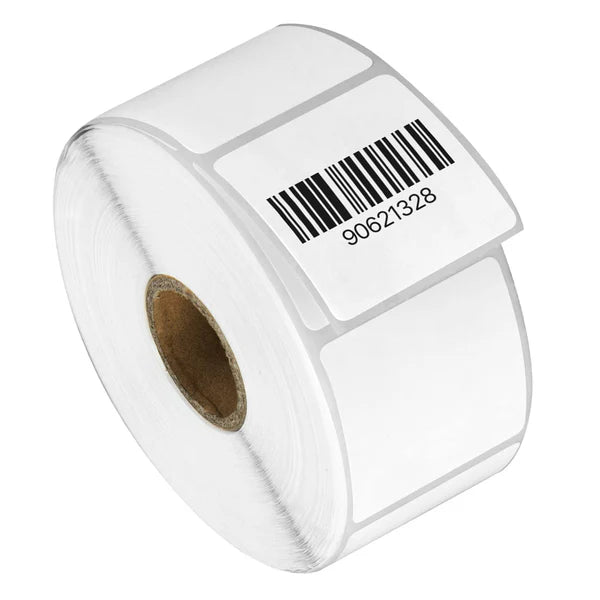
Barcodes turn a manual count into a two-second scan. Print a label for each item or storage bin, scan it on the way in and out, and the spreadsheet stays current without extra paperwork.
The following products from our range support this step:
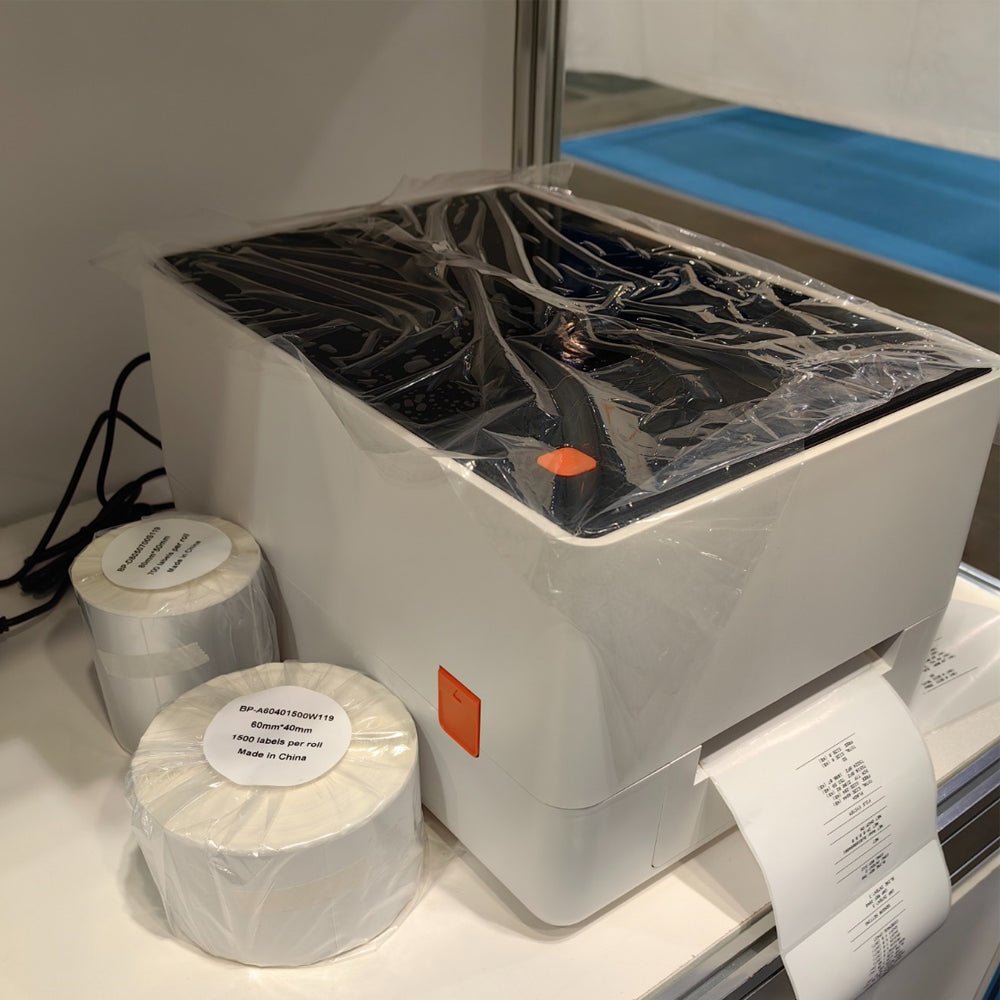
- The Aimo CT200 desktop barcode printer prints labels at 203dpi, in thermal transfer and direct thermal modes.
- The Edoo H41-22 wired handheld bar code scanner reads 1D and 2D codes, including codes on mobile screens.
- Aimo vinyl white label rolls are designed for durable adhesion to plastic, cardboard, and glass.
Step 7: Handle Loss, Damage, Transfers and End-of-Year Reconciliation
Every school loses stock to breakage, staff transfers, and simple shrinkage. Plan for it instead of arguing about it in June.
Run a short cycle count each month on your highest-use items, and a full physical inventory at year end. Record every transfer between departments with a name and a date.
At year end, compare the physical count to the spreadsheet and write off the difference with a reason noted. That record is what makes next year's budget request credible.
Most schools do not have a supply problem. They have a record-keeping problem, and it is fixable in a term.
Frequently Asked Questions
How often should schools conduct an inventory count?
Most schools get the best results from a full physical count once a year, usually before the new academic year, plus short cycle counts on high-use items every month or term. High-turnover stock like paper, toner and whiteboard markers moves fast enough that a yearly count alone will not catch shortages. Cycle counting a few shelves each week keeps your school supply inventory records accurate without closing the storeroom for a full day.
What should a school supply inventory spreadsheet include?
At minimum, list the item name, category, unit of measure, quantity on hand, reorder level, supplier, lead time and last count date. Add a column for location (storeroom, science lab, admin office) and one for who owns that stock. A school supply inventory spreadsheet template with these fields lets you sort by supplier when it is time to order and spot items sitting untouched for months.
How do you set reorder levels for school supplies?
Multiply average weekly use by the supplier's lead time in weeks, then add safety stock for busy periods like exam season. If a school uses 20 reams of paper a week and delivery takes one week, the reorder point is 20 reams plus a buffer, say 30. Review school supply reorder levels each term, because usage shifts between the start of the year and the quiet summer months.
How can schools reduce excess or unused inventory?
Run a school inventory audit that flags anything untouched for a full term, then redirect it to a department that needs it or stop reordering it. Consolidate duplicate orders from different departments into one purchase, and buy printer consumables in the right format for your machines rather than guessing. Labeling shelves with barcode tags and scanning issues as they happen stops stock from disappearing into cupboards and being reordered unnecessarily.


