

Last Updated: November 14, 2026
Quick Summary
For most small businesses, thermal binding is worth it once you bind more than a handful of documents a month. The decision comes down to volume, document type and how polished the finished copy needs to look. Proposals, board reports and training manuals benefit most, while short internal memos usually do not.
- Thermal binding suits client proposals, board reports and training manuals that need a clean spine.
- Work out break-even by dividing machine cost by the gap between outsourced and in-house cost per document.
- Monthly volumes of roughly 20 to 40 documents often reach break-even within the first year or two.
- Count staff time in the comparison, since warm-up, binding and cooling slow batches down.
- Test one workflow for a month before committing to buying a machine.
Table of Contents
- How Thermal Binding Works and What It Produces
- Thermal Binding vs Comb Binding: Side-by-Side Comparison
- Thermal Binding Cost per Book and Break-Even Volume
- Thermal Binding Machine Capacity and Volume Thresholds
- Thermal Binding vs Outsourcing: Which Fits Your Workflow
- Setting Up Your Binding Supplies and Choosing Your First Step
- Frequently Asked Questions
For most small businesses in Lebanon, thermal binding is worth it once you bind more than a handful of documents a month. The economics come down to volume, document type and how polished the finished copy needs to look. Below, we walk through where thermal binding makes sense and where a cheaper option does the job just as well.
Guide to document finishing for small offices
We recommend thinking about thermal binding as a finishing decision, not a default. A client proposal, a board report and a training manual all benefit from a clean spine and a flat-lying cover. A ten-page internal memo usually does not.
How Thermal Binding Works and What It Produces
Warm-up time, binding cycle and cooling time all affect how quickly a batch moves through the machine. Expect the spine to hold best on documents within the rated sheet capacity, because overloading weakens the bond at the edges.
Thermal Binding vs Comb Binding: Side-by-Side Comparison
| Factor | Thermal Binding | Comb Binding |
|---|---|---|
| Finish | Sealed, polished spine | Open, visible comb |
| Page flat-lying | Good | Excellent |
| Reuse and page changes | Difficult | Easy |
| Best for | Proposals, reports, manuals | Training packs, drafts, forms |
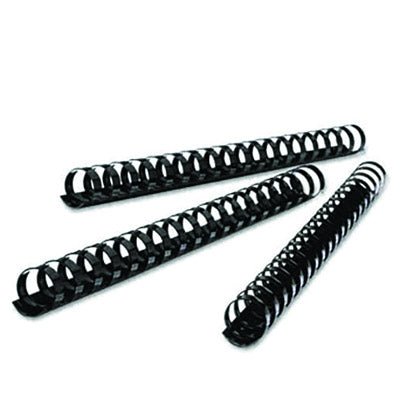
For the comb option, the Binditek Comb Binding Spines - 100 Box come in a box of 100 and suit regular use, at LBP 4 per spine.
Thermal Binding Cost per Book and Break-Even Volume
Build the calculation from four inputs: the machine outlay, the consumable cost per document, the staff time per binding cycle, and the outsourced price you would otherwise pay.
The break-even formula is straightforward: divide the machine cost by the difference between the outsourced price per document and the in-house consumable cost per document. The result is the number of documents you must bind before the machine is cheaper than outsourcing. Run it three times with realistic scenarios rather than one optimistic guess:
- Occasional use (roughly 5-10 documents a month): the machine cost is spread across too few documents to beat outsourcing on price alone. In-house wins only on same-day turnaround or confidentiality.
- Monthly use (roughly 20-40 documents a month): the break-even point typically falls within the first year or two, and the case strengthens if staff time is already paid for and the machine sits on a desk.
- High-volume use (50+ documents a month): consumables dominate the cost, so negotiating cover and spine pricing in bulk matters more than the machine price. At this level, in-house binding is usually the lower-cost route.
Staff time belongs in the comparison even when it is not a new cash cost. A thermal cycle includes warm-up, binding and cooling, so a batch of ten documents takes longer than the per-document cycle time suggests. If binding pulls an employee away from billable work, that opportunity cost can erase the consumable saving.
Guide to document finishing for small offices
Thermal Binding Machine Capacity and Volume Thresholds
- Occasional (a few documents a month): a manual or low-capacity thermal machine is enough, and reliability matters more than speed. Warm-up time is irrelevant when you bind one document at a time.
- Monthly (roughly 20-40 documents): check the cycle rate and whether the machine can run batches back to back without a cool-down pause. This is the band where a slow machine starts to cost staff time.
- High-volume (50+ documents): prioritise duty cycle, repairability and local service access over headline capacity. A machine that fails mid-batch with no local repair option is a bigger risk than one with a lower sheet rating.
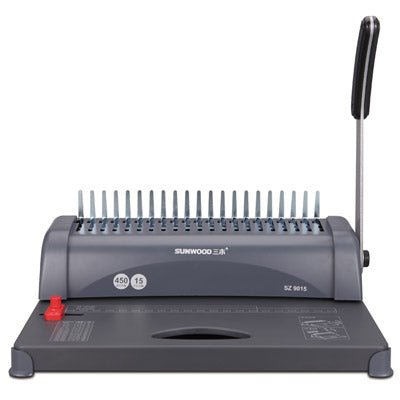
For a low-volume starting point, the Sunwood SZ9012 Manual Binding Machine (LBP 50) punches up to 15 sheets and binds up to 450 sheets, with a full metal body.
Thermal Binding vs Outsourcing: Which Fits Your Workflow
Many small teams start with outsourcing, track their monthly volume for a quarter, then decide whether a machine is worth buying. That approach avoids paying for capacity you do not use.
Setting Up Your Binding Supplies and Choosing Your First Step
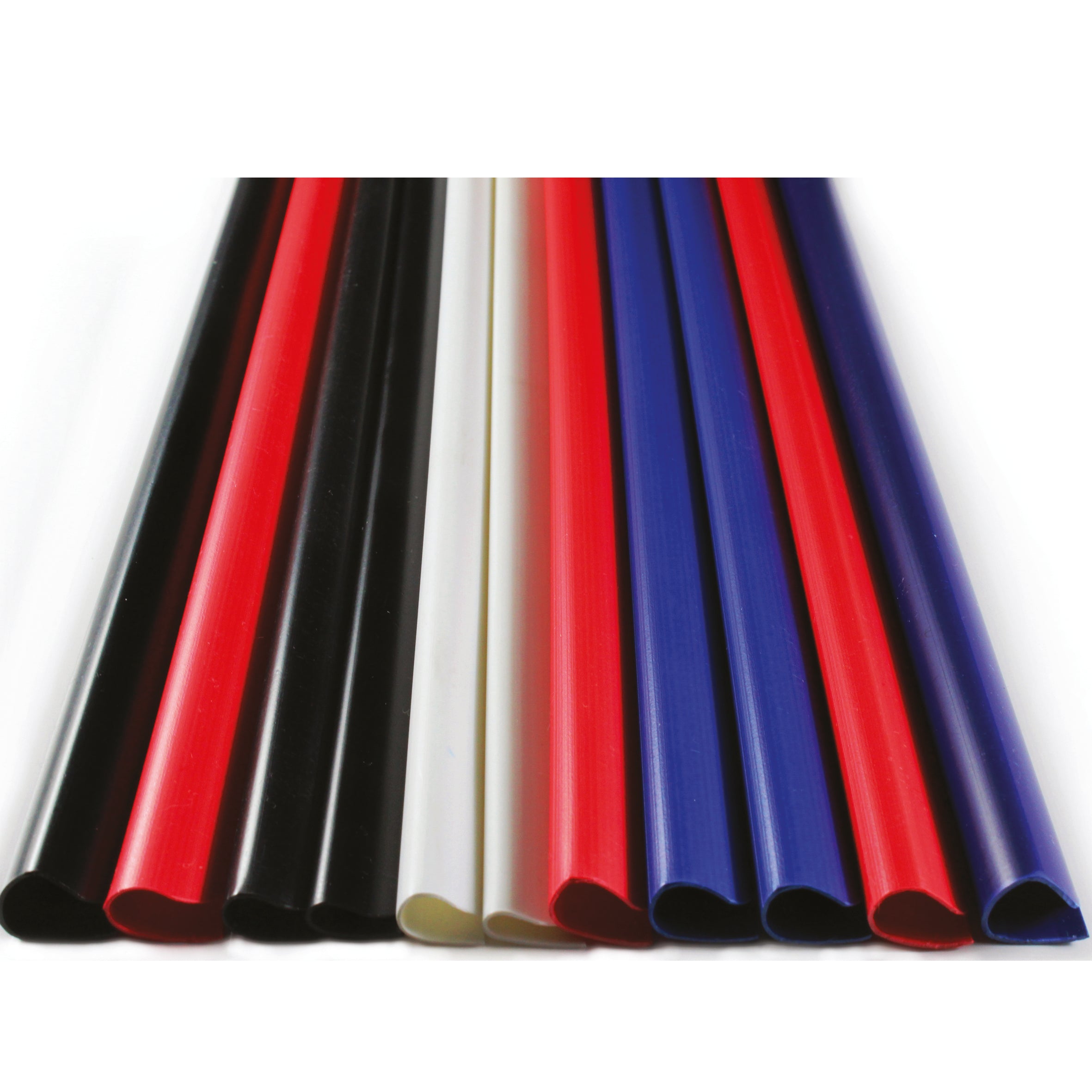
The Leather Grain A4 PVC Binding Covers (LBP 8) are made from durable PVC with a leather grain texture, and the Binditek A4 slide Binding 100-box (LBP 6) is available in black.
Watch out: buying covers and spines before you know your sheet counts leads to mismatched stock. Measure your heaviest document first, then order to match.
Test one workflow for a month before committing. Dabbous Mega Supplies offers fast delivery across Lebanon, so restocking stays simple once you know what you use. Get started with the binding range from Dabbous Mega Supplies and bind your next proposal in-house.
Frequently Asked Questions
Is thermal binding worth it for a small business?
Thermal binding is worth it for a small business that regularly produces reports, proposals or manuals and wants a clean, professional finish. The decision depends on volume. If you bind only a few documents a month, you may find a Sunwood SZ9012 Manual Binding Machine (LBP 50) or Binditek comb spines (LBP 4 each in a 100 box) useful. Calculate your monthly volume first, then compare the cost per book before buying equipment.
How many pages can a thermal binding machine bind?
Capacity depends on the machine's rated sheet and spine limits, so check the manufacturer's specification before buying. Thermal binders are typically rated for a set number of sheets per cycle, and binding thicker documents in one pass can cause uneven adhesive melt. Check the rated page count of the machine you choose against your heaviest typical document.
Is it cheaper to buy a thermal binding machine or outsource binding?
The cost of a machine depends on how often you produce documents in-house and how the per-book cost compares with outsourcing. Work out your break-even point by dividing the machine cost by the difference between your in-house cost per book and the outsourced price. Include your staff time, since binding takes labor even when the machine does the heating.
What should a small business look for in a thermal binding machine?
Look at the sheet capacity, warm-up and cooling time, and the cover stock you will use most often. Check the compatibility of binding covers such as the Leather Grain A4 PVC Binding Covers (LBP 8) with your machine. Ease of use and repairability also matter, so ask about spare parts and support before you buy. Buy for the volume you expect over the next year rather than the busiest month you can imagine.


