

Quick Summary
A money counter machine counts cash in seconds instead of by hand and checks notes for counterfeits as they pass through. For Lebanese shops, pharmacies, exchange offices and restaurants that handle cash daily, the right model depends on note volume, currencies handled and whether a printed record is needed.
- The Feeltech FT610 supports up to 16 currencies, including LBP, USD and EUR, with an optional printer sold separately.
- The Feeltech FT2040 processes 1,000 bills per minute with a 200-sheet hopper and batch presetting.
- The Feeltech D300 is a note detector, not a counter, and does not produce a printed record.
- No single detector catches every counterfeit, so flagged or doubtful notes should be set aside for manual review.
- Starting prices are LBP 550 for the FT610, LBP 99 for the FT2040 and LBP 69 for the D300.
Table of Contents
- Why a Money Counter Machine Pays Off for Cash-Heavy Businesses
- How We Evaluated the Dabbous Mega Supplies Money Counter Range
- Feeltech FT610 Money Counter: Full-Featured Counting With Printer
- Feeltech FT2040 Money Counter: High-Speed Batch and Add Counting
- Feeltech D300 Money Detector and Printer Add-On: Counterfeit Checking Compared
- Which Money Counter Fits Your Cash Volume and Budget
- Choosing Your Next Money Counter and Getting It Delivered
- Frequently Asked Questions
Why a Money Counter Machine Pays Off for Cash-Heavy Businesses
A money counter machine takes the slow, error-prone job of counting cash and turns it into a task that takes seconds. For shops, pharmacies, exchange offices and restaurants that handle cash every day, that saves time at the end of each shift and removes a common source of mistakes. Counting a drawer by hand is tiring, and a single miscount can throw off the whole day's balance.
Counterfeit notes are the other reason. A machine with UV, magnetic and infrared detection checks each note as it passes through, rather than relying on a quick glance. A cashier's day can change a great deal once counting and checking are handled by a machine instead of by hand.
Watch out: a machine only protects you if staff know what it flags. Set a simple rule for what happens when the counter stops on a suspect note, and make sure everyone on the till follows it.
How We Evaluated the Dabbous Mega Supplies Money Counter Range
Product listings often describe features without explaining which ones matter for a given cash workload. To make the comparison useful, the machines can be assessed against five practical criteria that map to how cash is actually handled at a counter.
Currency handling and recognition. We checked which currencies each machine recognizes automatically and whether it can count mixed denominations in a single pass. A machine that requires pre-sorting by denomination adds a manual step that erodes the time savings.
Counterfeit detection methods. We noted which detection technologies are present, UV, magnetic (MG), infrared (IR), and advanced features like CIS or MT, and whether the machine stops and flags a suspect note rather than simply passing it through. A detector that only alarms without identifying the note type is less useful at a busy till.
Counting modes and batch control. We looked for batch presetting (stopping at a set number of notes), add mode (accumulating totals across runs), and mixed-value counting. These modes determine whether the machine suits bundling, end-of-shift reconciliation, or both.
Throughput and capacity. We compared the stated processing speed and hopper/output capacity. A machine rated at 1,000 notes per minute with a 200-note hopper handles large stacks differently from a slower unit with a smaller hopper, and that difference matters at high-volume counters.
Record-keeping and connectivity. We noted whether a printer is available, whether it is included or sold separately, and whether a remote display is supported. For businesses that need an audit trail, the printer option is a deciding factor.
This evaluation relies on the product listings and specifications. Where a feature is optional or sold separately, it is noted. The aim is to help you match a machine to how you actually handle cash, not to rank them on features you will never use.
Feeltech FT610 Money Counter: Full-Featured Counting With Printer
The Feeltech FT610 is the most complete machine in the range. It supports fully automatic currency recognition and mixed-value counting, with several counting modes including Mix, Sort, PCS, Multi and Auto. It checks notes for UV, MG, IR, MT and CIS features, and it stops with an alarm and an error code when a counterfeit or abnormal note is detected.
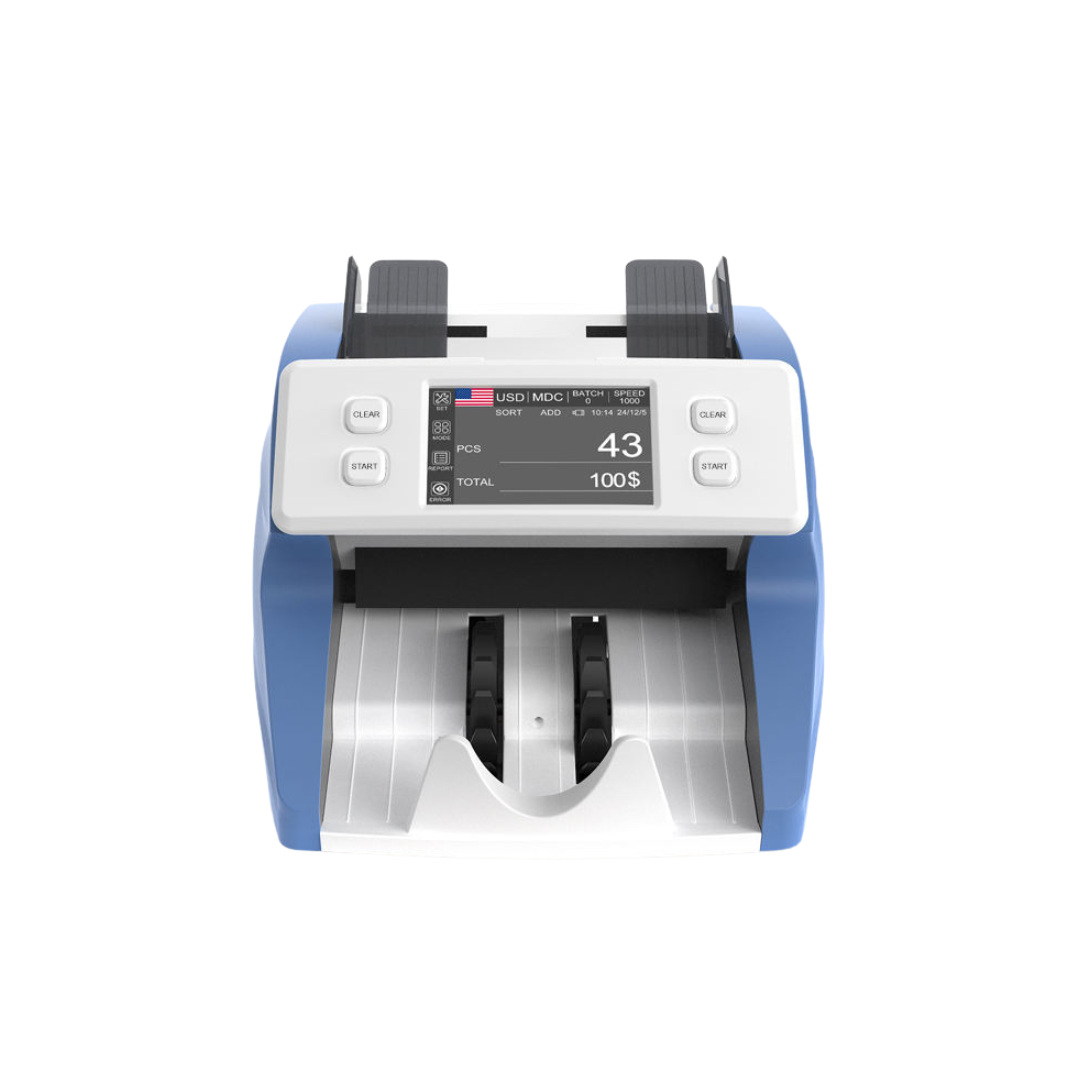
It supports up to 16 currencies, including LBP, USD and EUR, which matters if your till handles more than one currency. A batch presetting function and a remote customer display round out the feature list.
The thermal printer is optional and sold separately, and it prints totals, batch summaries and verification slips. If you want a paper record of each count, this is the model to consider, paired with the printer listed in our catalogue.
Best for: shops and exchange offices that count mixed currencies and need printed records. Skip if: you only count one currency and never need a printout.
Starting price: LBP 550.
Feeltech FT2040 Money Counter: High-Speed Batch and Add Counting
The FT2040 is built around speed. The listing gives a processing rate of 1,000 bills per minute, with a 200-sheet hopper and a 200-sheet output stacker. It uses UV and MG scanning with IR sizing sensors, and it halts with a buzzer and error code on counterfeit, double, chained or half notes.
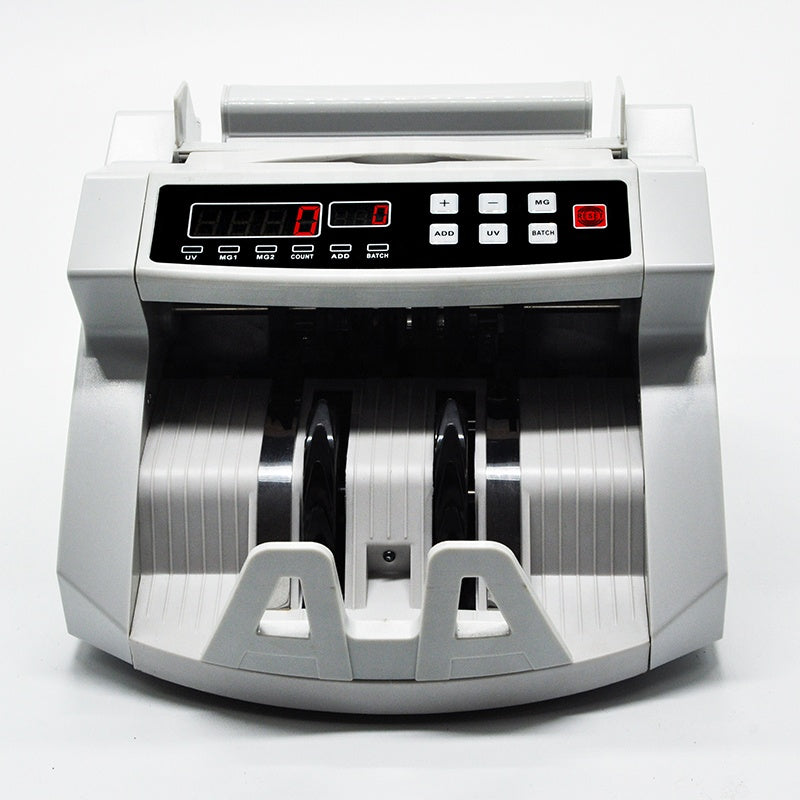
Its Batch mode pauses at a preset count, such as 50 or 100 notes, which suits bundling at the till. Add mode keeps a running total across several cash drops, which is useful at the end of the day when cash comes in from more than one source.
The FT2040 is listed for LBP, USD, EUR and AED, among other currencies. It has a single front display.
Best for: busy retail counters with high note volumes and a need for batch bundling. Skip if: you need a printed record of each count.
Starting price: LBP 99.
Feeltech D300 Money Detector and Printer Add-On: Counterfeit Checking Compared
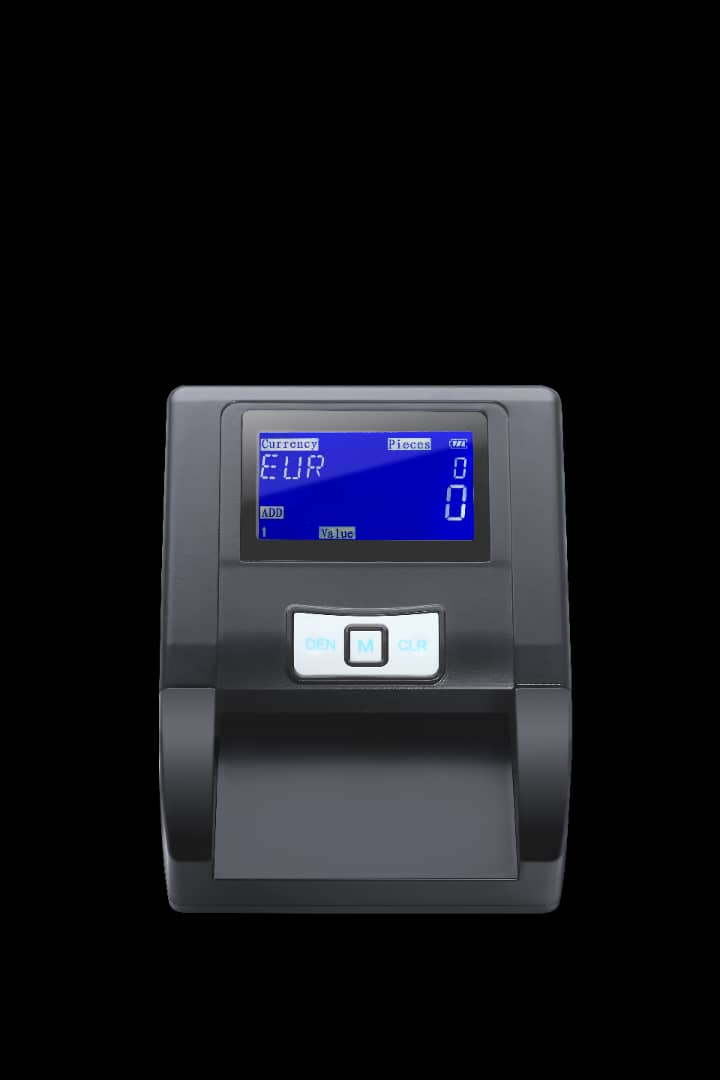
The D300 is a dedicated money detector, not a counting machine. It verifies individual notes rather than totalling a stack, which makes it a different tool from the FT610 and FT2040 counters. Understanding what its UV, MG, and IR checks actually do, and what they cannot do, is essential before relying on any detector at the counter.
What UV detection catches. UV detection checks for security features on banknotes. Because no single check confirms authenticity, UV results should be read alongside other checks.
What magnetic (MG) detection catches. MG detection checks for magnetic ink features on banknotes, and the result is one input among several.
What infrared (IR) detection catches. IR detection checks infrared security layers on banknotes as part of the overall screening.
The limitation that matters most. No single detector catches every counterfeit, so a note that passes the checks should still be inspected where the value warrants it. Detector results are best treated as a first filter, with suspicious notes set aside for manual review or bank verification. Establish a clear rule: any note the machine flags, or any note that feels or looks wrong to staff, goes into a separate envelope and is not returned to circulation until checked.
The D300 is compact and is listed for retail shops, supermarkets, pharmacies, exchange offices and restaurants that need to screen notes as they are received.
The printer listed in the range is an add-on for the FT610 counter, not for the D300. If you want a printed verification record, that combination is the route. The D300 itself does not produce a printed record.
Best for: checking notes at the counter where counting volume is low. Skip if: you need to count large stacks quickly or require a printed audit trail.
Starting price: LBP 69.
Which Money Counter Fits Your Cash Volume and Budget
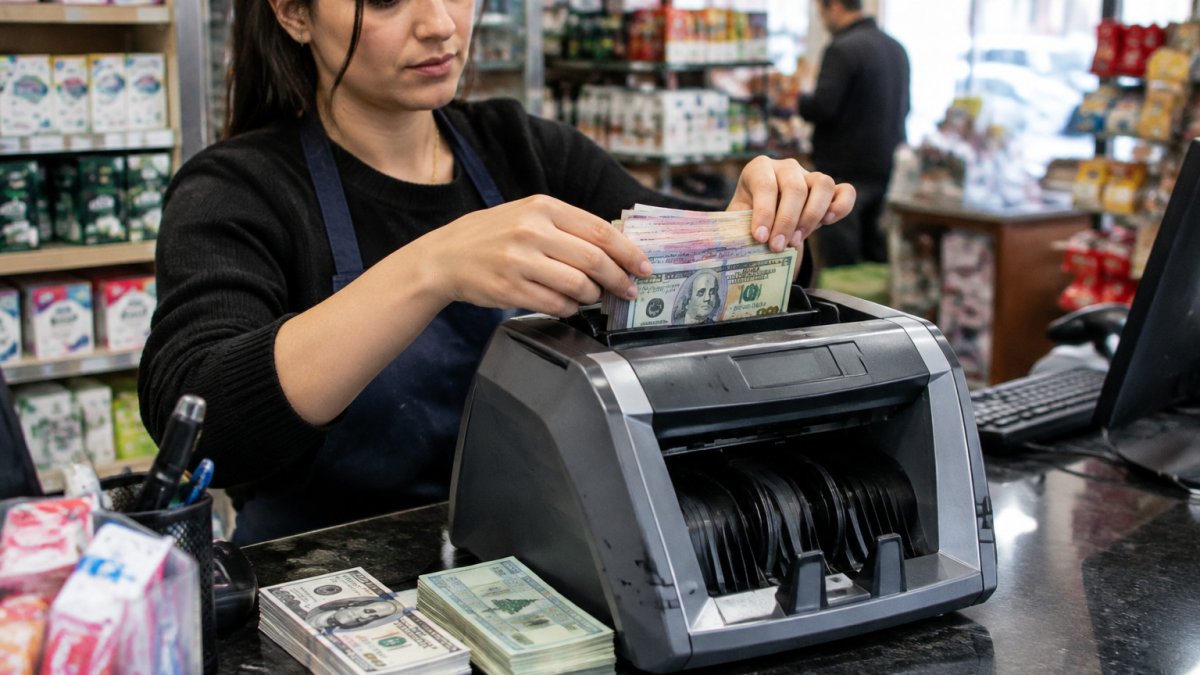
Match the machine to your daily cash volume first, then to your budget. A small shop that handles a few hundred notes a day may only need a detector. A supermarket or exchange office handling thousands of notes benefits more from a high-speed counter with batch modes.
Here is a simple way to compare the options:
| Model | Type | Starting Price | Printer | Best For |
|---|---|---|---|---|
| Feeltech FT610 | Counter with mixed-currency and sort modes | LBP 550 | Optional, sold separately | Mixed currencies, printed records |
| Feeltech FT2040 | High-speed counter with batch and add modes | LBP 99 | No | High note volume, bundling |
| Feeltech D300 | Note detector | LBP 69 | Add-on for FT610 only | Checking notes at low volume |
If your budget covers it, the FT610 with its printer offers the widest coverage. If speed and batching matter most, the FT2040 is the stronger fit. Choose the D300 when counterfeit checking is the main need.
Starting prices of the Feeltech money counters (LBP)
Choosing Your Next Money Counter and Getting It Delivered
Before you order, decide which currencies you count, whether you need a printed record, and how many notes you process in a typical day. Those three answers will point you to one model in the range.
Once you have chosen, the order is straightforward. Fast delivery is available anywhere in Lebanon, and you can contact us on WhatsApp to help choose the right model if you are unsure. Ask about the printer add-on at the same time if you plan to use the FT610 with one.
Frequently Asked Questions
How accurate are modern money counter machines?
Accuracy depends on the sensors and counting mode you use. The Feeltech FT610 and FT2040 combine UV, MG and IR detection with automatic stops when a note is flagged, so a counterfeit, double, chained or half note halts the run and shows an error code. Counting accuracy is strongest when notes are loaded flat, sorted by denomination and fed in batches of similar condition. Check the count on a small test bundle before relying on it for end-of-day totals.
Do money counter machines detect counterfeit bills?
Yes, the models in this range include counterfeit checks. The FT610 uses UV, MG, IR and MT detection, and the FT2040 uses a tri-sensor matrix with UV, MG and IR. The D300 Money Detector is a dedicated counterfeit note checker with UV, MG and IR detection for shops, pharmacies and exchange offices. No machine catches every fake, so still inspect high-value notes by hand.
What features should I look for in a currency counter for LBP and USD?
Confirm that the machine supports LBP and USD, since many cash businesses in Lebanon handle both. The FT610 supports up to 16 currencies including LBP, EUR and USD, and it offers mixed value counting. Look for batch presetting if you bundle cash, an add mode if you count several drops in one session, and a printer if you need receipts. The FT610 printer is an optional extra at LBP 550 for the machine and LBP 20 for the printer accessory.
Are money counters worth the investment for small businesses?
For a shop or office that handles cash every day, a counter saves time at close and reduces the risk of miscounting. The FT2040 is priced at LBP 99 and counts around 1,000 bills per minute, which suits cash-intensive outlets. A smaller business that only occasionally counts cash may do well with the D300 detector at LBP 69 for counterfeit checks alone. Compare the price against the hours spent counting by hand each week.


